How We Keep Masseria's Olive Oil Fresh, From the Mill to Your Kitchen
Olive oil isn't like wine. It doesn't get better with age. From the moment it's pressed, it starts to oxidize, and light, heat, and air all speed that up.
That's why most olive oil tastes flat by the time it reaches you. It's just old. Fresh olive oil is a different thing entirely, and most people have never actually tasted it.
Freshness is what gives olive oil its vibrant flavor, peppery finish, and the antioxidants and polyphenols olive oil is famous for.
Every decision we make after pressing comes down to one question: how do we get the oil to you while it still tastes like the day it was pressed?
Freshness you can taste
Fresh oil is alive and full of flavor. Green tomato, fresh-cut grass, and a peppery kick at the back of your throat that might make you cough the first time. That peppery kick is the tell. It comes from polyphenols, the antioxidants olive oil is famous for, and it's the clearest sign you're tasting an oil that's still in its prime.
Here's what most people don't know: those polyphenols fade as oil oxidizes. The same age that dulls the flavor also strips out the compounds that make olive oil good for you. Freshness isn't a detail. It's the difference between an oil that's bold and full of antioxidants and one that has lost both.
The part that surprises everyone: we bottle year round
Most brands press once, bottle the entire harvest at once, and let it sit in a warehouse until it sells. The problem is that olive oil starts oxidizing the moment it's bottled. By the time a bottle reaches you months later, it has already lost some of its flavor and nutrients.
We do things differently, and it takes extra steps. After pressing, our oil goes into climate-controlled stainless steel tanks sealed under argon gas, an inert gas that pushes out the oxygen and essentially puts oxidation on pause. The oil waits there, untouched by air, until we're ready to bottle. Then we bottle in small batches throughout the year, so the tin you open is as close to freshly pressed as possible, instead of close to a year old.
It's more work and it costs more, which is why most producers don't go through the trouble. It's also one of the biggest reasons Masseria tastes the way it does.
From tree to press, the same day
Olives start breaking down the moment they're picked. Leave them sitting and they begin to ferment, the acidity climbs, and off-flavors set in. So our olives go from tree to mill the same day they're picked, often within hours.
Our press stays cold on purpose. The legal limit to call an oil "cold-pressed" is 27°C, around 80°F, which is warmer than most people assume. We run colder. Our equipment stays temperature-controlled through malaxation, the slow mixing stage that releases oil from the paste, so nothing heats up.
Heat strips out the delicate aromatics and the polyphenols behind that grassy flavor and peppery finish.
Tin, not glass
You've probably heard that dark glass is best for olive oil. However, even the darkest glass is still translucent, still letting light passes through, and light is one of the fastest ways to oxidize olive oil. It's why some high-end producers wrap their glass bottles in foil.
Glass has a second problem: it holds heat. Leave a bottle near the stove or in a sunny kitchen and it works like a small oven.
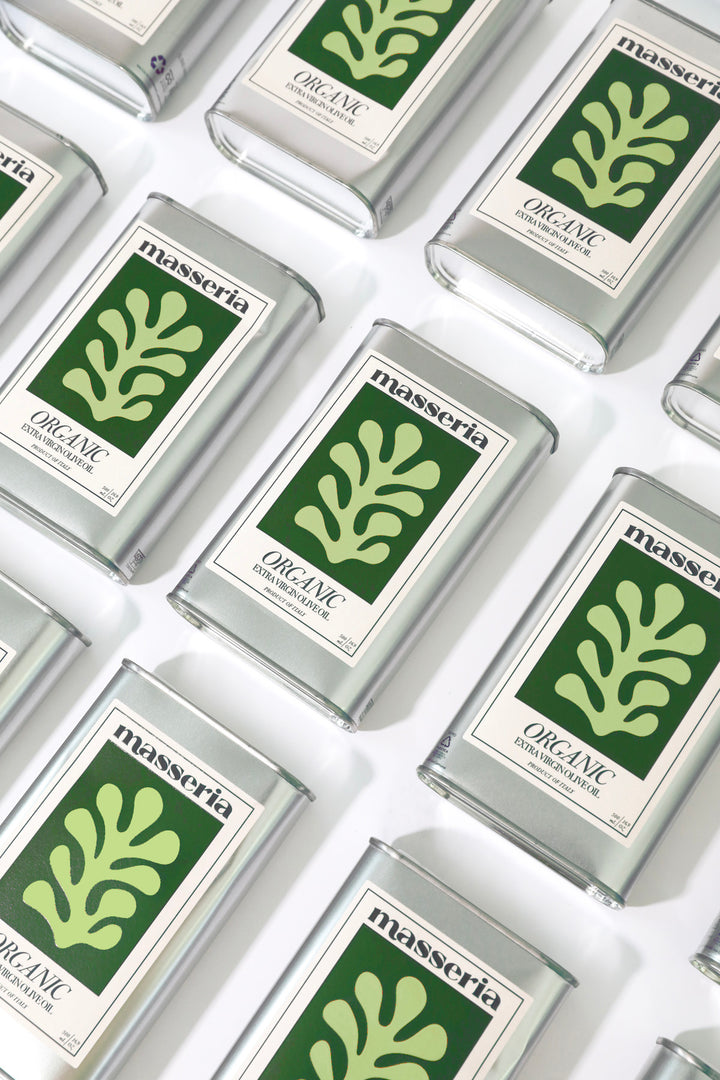
We use traditional food-grade tin-plated steel instead. It blocks 100% of light, doesn't trap heat, and has no aluminum or plastic lining touching the oil. It's lighter than glass too, so it takes less energy to ship, and it's endlessly recyclable.
A size you'll actually finish
Once you open your olive oil, the clock speeds up again. A little air gets in every time you pour. That's why we use 500mL tins instead of the large bottles you see on grocery shelves. It's enough oil for everyday cooking, and small enough that you finish it while it's still fresh.
That's the whole idea behind Masseria: protect the freshness and quality from tree to kitchen counter, preserving the vibrant flavor, peppery finish, and natural polyphenols that make truly fresh olive oil so special.